
PLN Develops Strategy for 100 GW Solar Power Expansion, MKI Offers Recommendations
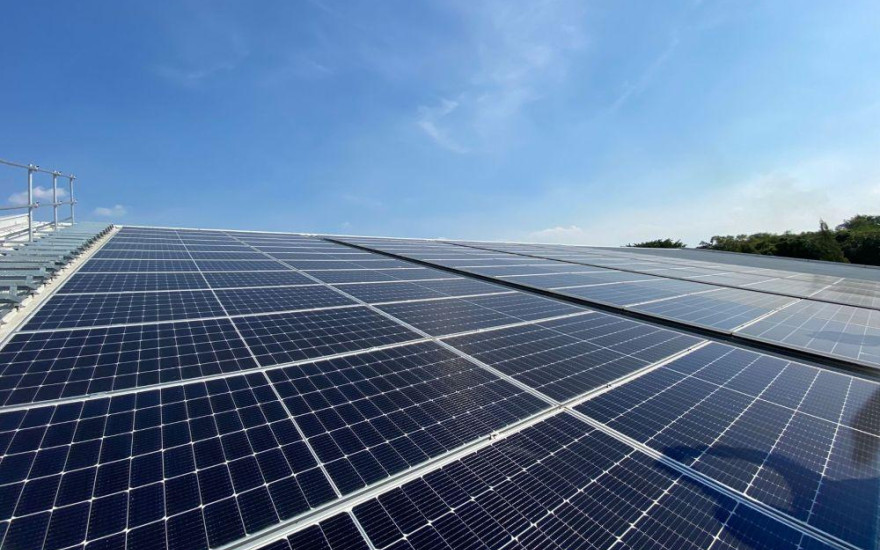
Jakarta — The Indonesian Electrical Power Society (MKI) has shared its views on PT PLN (Persero)'s accelerated ("quick wins") initiative to develop 100 gigawatts (GW) of solar power capacity.
Chairani Rachmatullah, Vice Chairman I for Transition Technology at MKI, stated that the 100 GW solar power target represents a positive policy direction to accelerate Indonesia's energy transition, strengthen national energy security, and create new investment opportunities. However, she emphasized that the program should not focus solely on increasing installed generation capacity.
According to Chairani, solar power development should also serve as a catalyst for downstream industrial development by strengthening domestic manufacturing of solar modules, inverters, batteries, engineering, procurement and construction (EPC) services, as well as enhancing the capacity of the national workforce.
"The success of this program should not be measured merely by how many gigawatts are installed. It must be designed as a driver of national industrial downstream development through a well-planned strategy that delivers tangible benefits to society," she told Bisnis on Monday (July 6, 2026).
Chairani also noted that the accelerated solar program should first be incorporated into PLN's Electricity Supply Business Plan (RUPTL). Without being included in the official planning document, the proposed projects would not be able to move into implementation.
She recommended that the government prioritize solar power development in regions that continue to experience electricity shortages or remain dependent on diesel-fired power generation.
In addition, solar energy projects could be directed toward serving customers and companies willing to pay premium electricity tariffs through formal agreements with PLN.
On the technical side, Chairani identified grid readiness as the biggest challenge in achieving the 100 GW target. She explained that the primary issue is the power system's ability to absorb and manage intermittent solar generation, which depends on weather conditions.
Therefore, solar expansion must be accompanied by stronger transmission infrastructure, smart grid implementation, and the deployment of energy storage systems such as Battery Energy Storage Systems (BESS) and pumped storage hydropower based on comprehensive technical studies.
She also stressed the importance of optimizing the generation mix and improving the operational flexibility of hybrid power systems to maintain grid reliability while keeping costs economically viable.
Despite these challenges, Chairani expressed confidence that PLN possesses the technical expertise and human resources necessary to successfully integrate large-scale solar energy into Indonesia's electricity system.
"We are confident that PLN, with its experienced workforce and technical capabilities, can effectively integrate solar power into Indonesia's diverse electricity networks, each with different levels of system maturity," she said.
MKI believes that PLN's first-phase quick wins target consisting of 27.4 gigawatt-peak (GWp) of solar power capacity and 82.5 gigawatt-hours (GWh) of Battery Energy Storage Systems (BESS) is sufficient to support reliable solar power operations.
According to Chairani, the proposed storage capacity provides approximately three hours of energy storage, which has become the global standard for load shifting storing excess solar generation during the day for use during evening peak demand while reducing the impact of weather-related fluctuations.
Given Indonesia's average effective solar irradiation of approximately four to four-and-a-half hours per day, the proposed BESS capacity is expected to absorb around 67% to 75% of daily solar generation. The remaining electricity can be delivered directly to the grid without passing through storage.
"This planning is fully aligned with MKI's principle that energy storage integration is essential to maintaining energy reliability and security," Chairani added.
She further emphasized that BESS deployment should be supported by strategies to optimize the generation mix, implement smart grid technologies, and tailor electricity system planning to the readiness of each regional grid to ensure cost-effective implementation.
Earlier, PLN President Director Darmawan Prasodjo announced that the company has prepared several quick wins initiatives to support President Prabowo Subianto's 100 GW solar power program.
The first phase will begin with the development of 27.4 GWp of solar capacity integrated with 82.5 GWh of Battery Energy Storage Systems.
One of the program's key priorities is the fuel-burning reduction program, aimed at eliminating diesel fuel consumption in major electricity systems.
"For the fuel-burning reduction program, PLN plans to develop 6.9 GWp of solar power supported by 15.5 GWh of Battery Energy Storage Systems," Darmawan said during a working meeting with Commission XII of the House of Representatives at the Parliament Complex in Jakarta.